
Social Anxiety Signs: How a Therapist Recognizes the Symptoms | Safe and Sound
According to doctors and psychologists, social anxiety disorder is characterized by fear or anxiety about one or more social situations in which an individual faces interaction with others. In addition, other diagnostic criteria are needed to conclude that someone is experiencing social anxiety disorder. Let's explore the diagnostic criteria for this disorder.
Nguyen Hoang Nguyen | Master of Science, Doctor – Institute of Psychology and Mental Health SnS
Center for Community Health and Development Research
1. What criteria do psychologists use to diagnose social anxiety disorder?
A psychologist will rely on the Diagnostic and Statistical Manual of Mental Disorders published by the American Psychiatric Association to determine if someone is experiencing social anxiety disorder. The characteristic sign of social anxiety disorder is fear or anxiety about one or more social situations in which the individual faces interaction with others. These types of social interactions include talking to or meeting strangers, being observed at social gatherings, or having to give speeches or perform in front of others.
People with social anxiety disorder constantly fear that their actions will be negatively judged, humiliated, or shamed. This can lead them to reject or offend others. According to psychologists, most social situations trigger fear and anxiety in those with this disorder. One manifestation of social anxiety disorder is the avoidance of potential social situations or enduring them with intense fear or anxiety.

Speaking in front of a crowd is a challenge for people with social anxiety disorder.
Excessive fear or anxiety often does not correspond to the actual threat posed by the social situation or socio-cultural context. For a doctor to diagnose social anxiety disorder, symptoms must have been present for six months or more, and the fear and anxiety must cause significant distress and impair social, occupational, or other important functions.
Individuals with social anxiety disorder require specialized support from mental health professionals and psychologists to manage and alleviate symptoms. The care process typically begins with a thorough assessment to determine the severity of the anxiety disorder. Based on this assessment, a psychologist or mental health professional from Safe and Sound will develop a personalized treatment plan tailored to each individual's specific needs and condition.


2. Psychologists need to differentiate social anxiety disorder from other mental disorders.
One emotion that is easily confused with social anxiety disorder is shyness. This is a common personality trait and is not considered a disease. However, if shyness significantly affects social or professional activities, be wary!
One mental disorder that needs to be distinguished from social anxiety disorder is agoraphobia. A person with agoraphobia often fears and avoids situations involving social interaction in crowded places such as supermarkets or movie theaters because they worry that escaping might be difficult or that they will have trouble finding help in these panicking or helpless situations. Meanwhile, those with social anxiety disorder fear judgment more than they fear space.

Agoraphobia can be mistaken for social anxiety disorder.
Psychologists also need to differentiate between generalized anxiety disorder and social anxiety disorder. Anxiety about being in a community is common in generalized anxiety disorder , but the focus of the problem lies in the nature of the relationships taking place rather than the fear of being negatively judged. Often, people with generalized anxiety disorder are overly anxious about their social standing, while those with social anxiety disorder tend to worry more about how others perceive and judge them.
To diagnose social anxiety disorder, psychologists need time to observe and rule out potentially misleading diagnoses, thereby developing appropriate therapeutic techniques for each individual.
3. How will the Safe and Sound psychologist help you?
We understand that psychotherapy can sometimes be a difficult step, and trying to find a new psychologist or psychiatrist who is a good fit for your individual needs and personality can be a challenging and challenging task.
We believe that the combination of a psychologist and a psychiatrist will provide the best support for you. Safe and Sound 's team of experts meets rigorous standards, helping you address a wide range of mental health issues including: postpartum depression, anxiety, schizophrenia, sleep problems, mood disorders, relationship issues, mental trauma, and more.
- Extensive professional experience dealing with a wide range of psychological issues.
- Skills in assessing, consulting, and developing effective support plans.
- Flexibly combine techniques and methods to effectively support and maintain sustainable results.


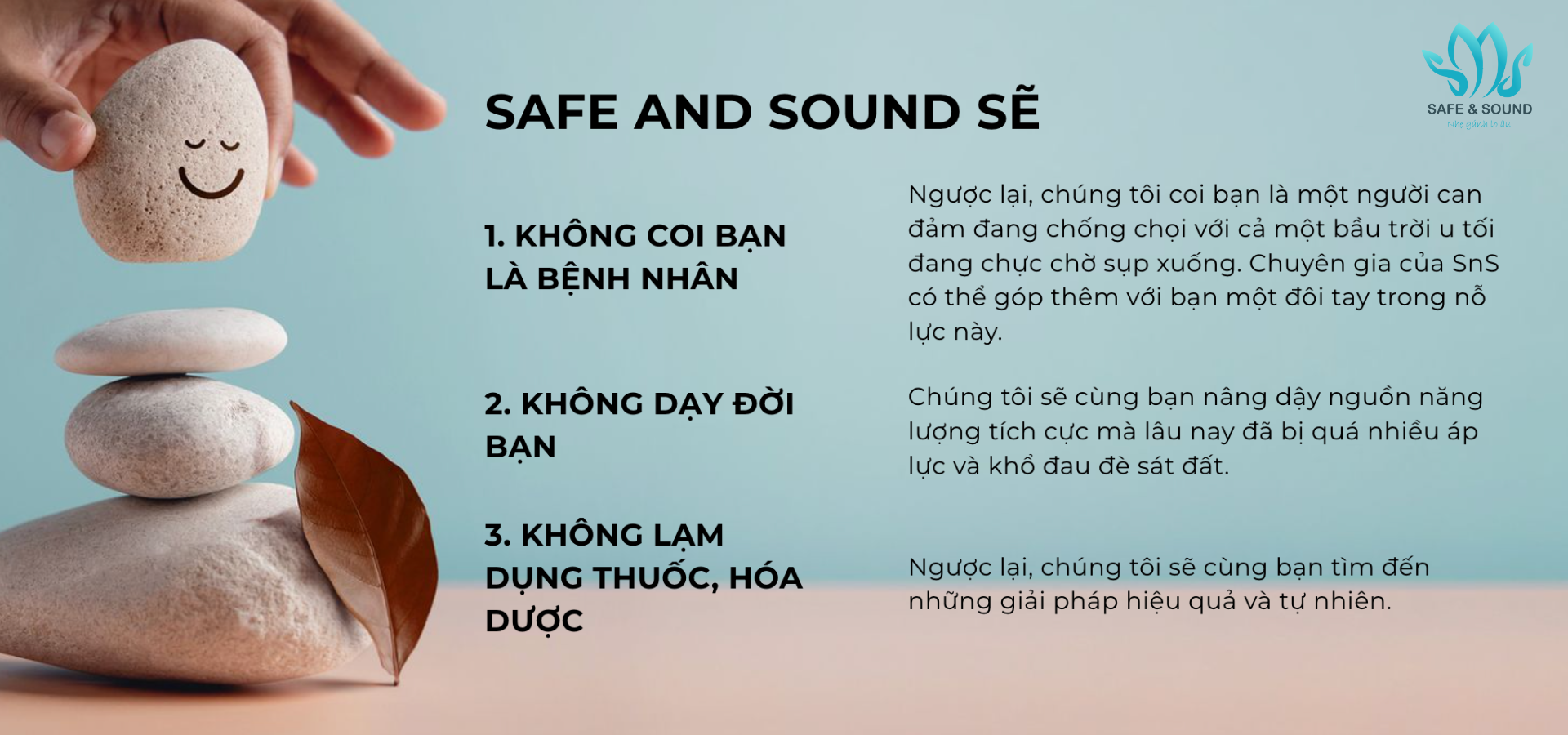
In addition, Safe and Sound will:
- We don't see you as a patient: Instead, we see you as a courageous individual battling against a dark sky threatening to collapse. SnS experts can lend you a helping hand in this endeavor.
- We won't lecture you: We will work with you to rekindle the positive energy that has long been suppressed by so much pressure and suffering.
- Avoid the overuse of medications and chemicals: Instead, we will work with you to find effective and natural solutions.